Your First Beach Ride: What to Expect
Riding a horse along the edge of the ocean is on a lot of lists. Here is what the ride is actually like, what to wear and how to make it a good one, even if you have never ridden.
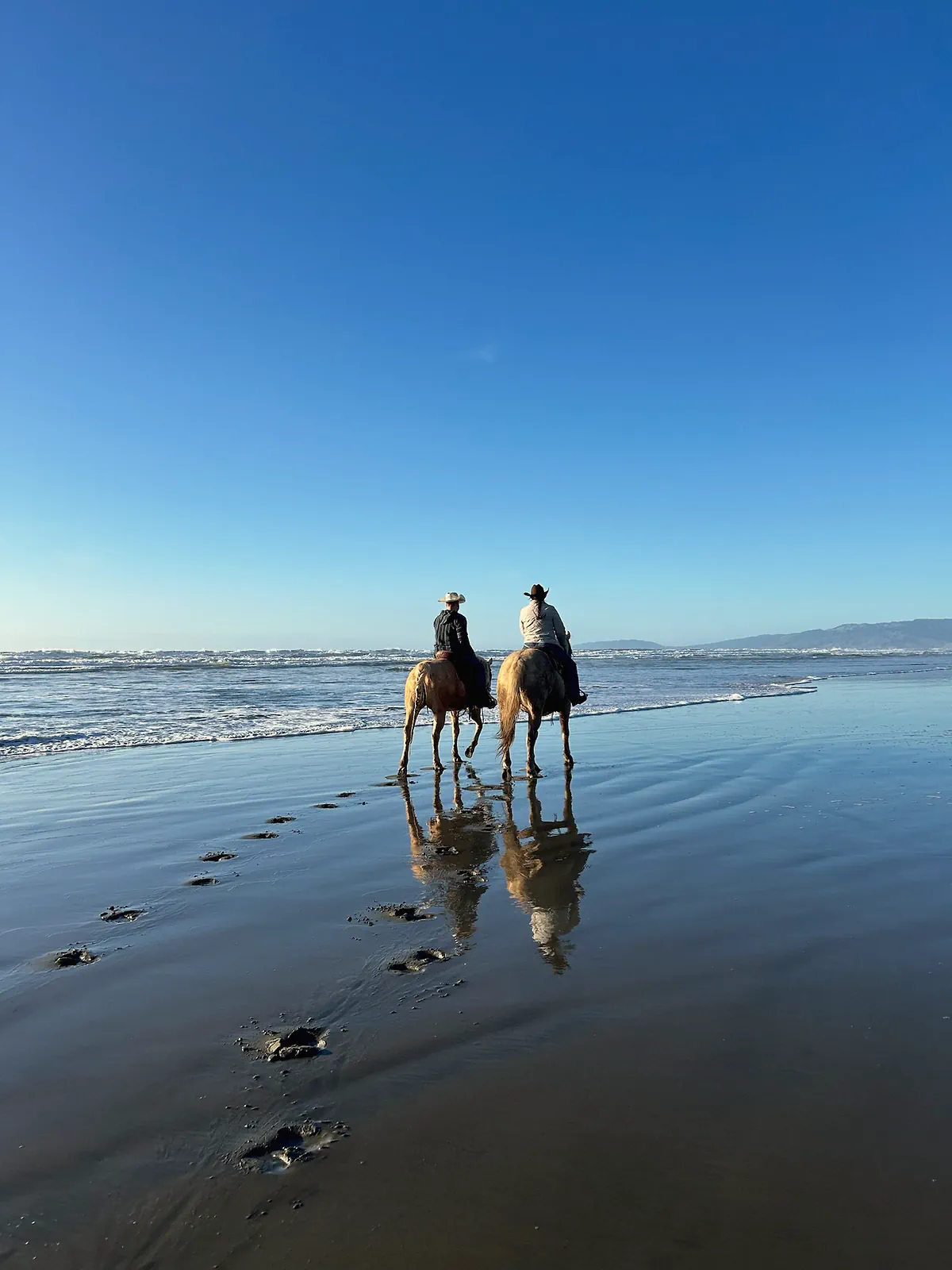
People picture a beach ride as a gallop through the surf with the wind in their hair. A real one is slower, quieter and better than the picture. You are high up, the horse is steady under you, the water is loud, and for an hour or two there is nothing else to pay attention to. Most guided beach rides are built for people who have never been on a horse. Knowing how they work makes the day easier.
How a guided ride works
You check in, sign a release and get fitted for a helmet. A guide asks about your riding experience, and honesty helps here: saying you are a beginner gets you a horse that suits a beginner. You are matched with a horse by size and experience, shown how to steer and stop, and helped into the saddle.
Guided rides go out in a line, usually at a walk. The horses know the route and the routine. Your job is to sit tall, keep a light hold on the reins, leave some space behind the horse in front and follow the guide's instructions. Photos happen at the places where it is safe to stop.
The coast decides the ride
Beach riding depends on conditions in a way an arena lesson does not.
- Tide. At low tide there is a wide band of firm, wet sand that is easy for horses to walk on. At high tide there may be little beach to ride. Stables plan their routes and times around this.
- Footing. Firm wet sand is good going. Deep dry sand is hard work for a horse, so guides keep to the better ground.
- Weather. The coast south of San Francisco is often cool, windy and foggy even when it is warm inland. Fog can make for a beautiful ride. Wind and cold are easier to enjoy when you dressed for them.
A good stable will change the route or reschedule when conditions are not safe. That is a sign of a well-run operation, not an inconvenience.
What to wear
- Long pants. Jeans or leggings protect your legs from the saddle.
- Closed-toe shoes, ideally boots with a small heel. No sandals.
- Layers, including a wind layer. You can take one off; you cannot add what you left in the car.
- Sunscreen, even in fog.
- Leave loose scarves, big bags and anything that flaps. Ask where to put your phone.
Wear the helmet the stable gives you, fitted snugly.
If you have never ridden
You do not need experience for a guided walk ride, but a few things help.
- Breathe and sit up. Horses read tension. A relaxed rider gets a relaxed horse.
- Keep your heels down and your weight in the stirrups.
- Hold the reins lightly. Pulling back hard is the most common beginner habit and the horse does not need it.
- Tell the guide if you are nervous or if anything feels wrong. That is what they are there for.
Expect to feel it in your legs the next day.
Before you book
Stables set their own rules, so check them: minimum age, weight limit, group size, what happens in bad weather, and whether the ride goes onto the sand or stays on trails above it. Riding carries real risk, and a stable that explains its safety rules clearly is the kind you want.
Near San Francisco, Ocean View Stables in Daly City sits on the bluff above the Pacific, and Leyden Horsemanship runs guided rides and lessons there.
What you will remember
Not the speed. People who come back from a beach ride talk about the sound of the surf, the way the horse's ears flick toward the waves, the reflection in the wet sand. It is one of the few ways left to see the coast at the pace people saw it for most of history, and that is reason enough to go.